Nail or screw in the tread
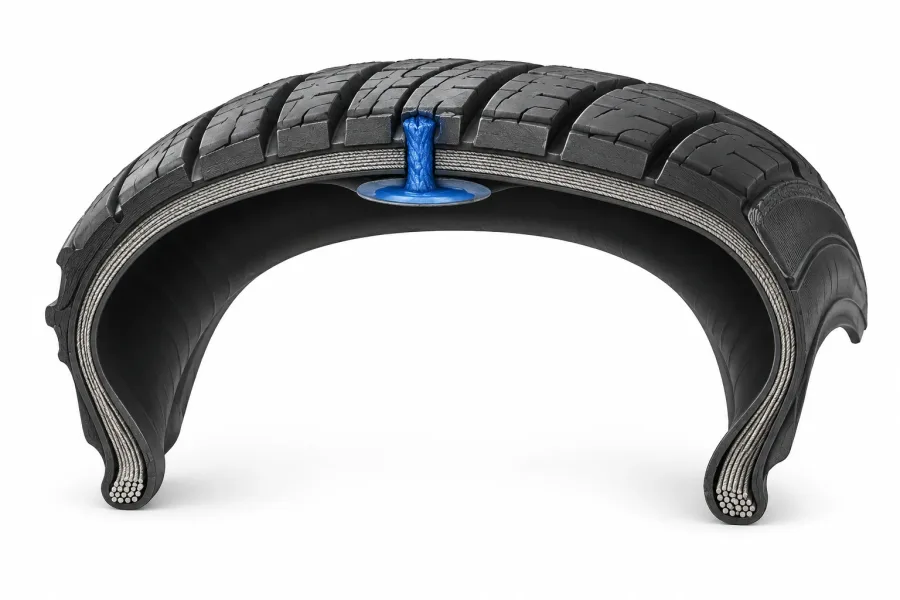
Plug-patch
Tire off the wheel, hole filled and inside sealed in one piece.
$39.99
Flat today.
Fixed today.
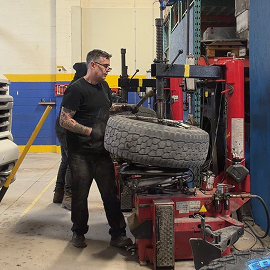
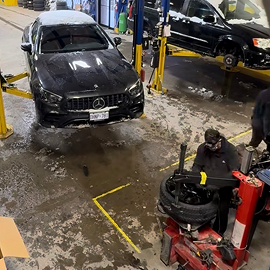
Bramalea Tire repairs flat tires and slow leaks the same day at 2020 Clark Blvd, Brampton. A plug-patch from the inside costs $39.99 per tire and takes about 30 to 45 minutes. Walk in, or call (905) 793-1881 to say you’re on your way.
4.5 ★ from 500+ Google reviews · In Brampton since 1990
Every metre on a flat can turn a repairable tire into a replacement.
Spare, sealant kit or roadside assistance. A kit plug is fine for the trip.
Check pressure at a gas station. If it holds, come in today.
(905) 793-1881. Flats go to the next open bay.
Can it be fixed?
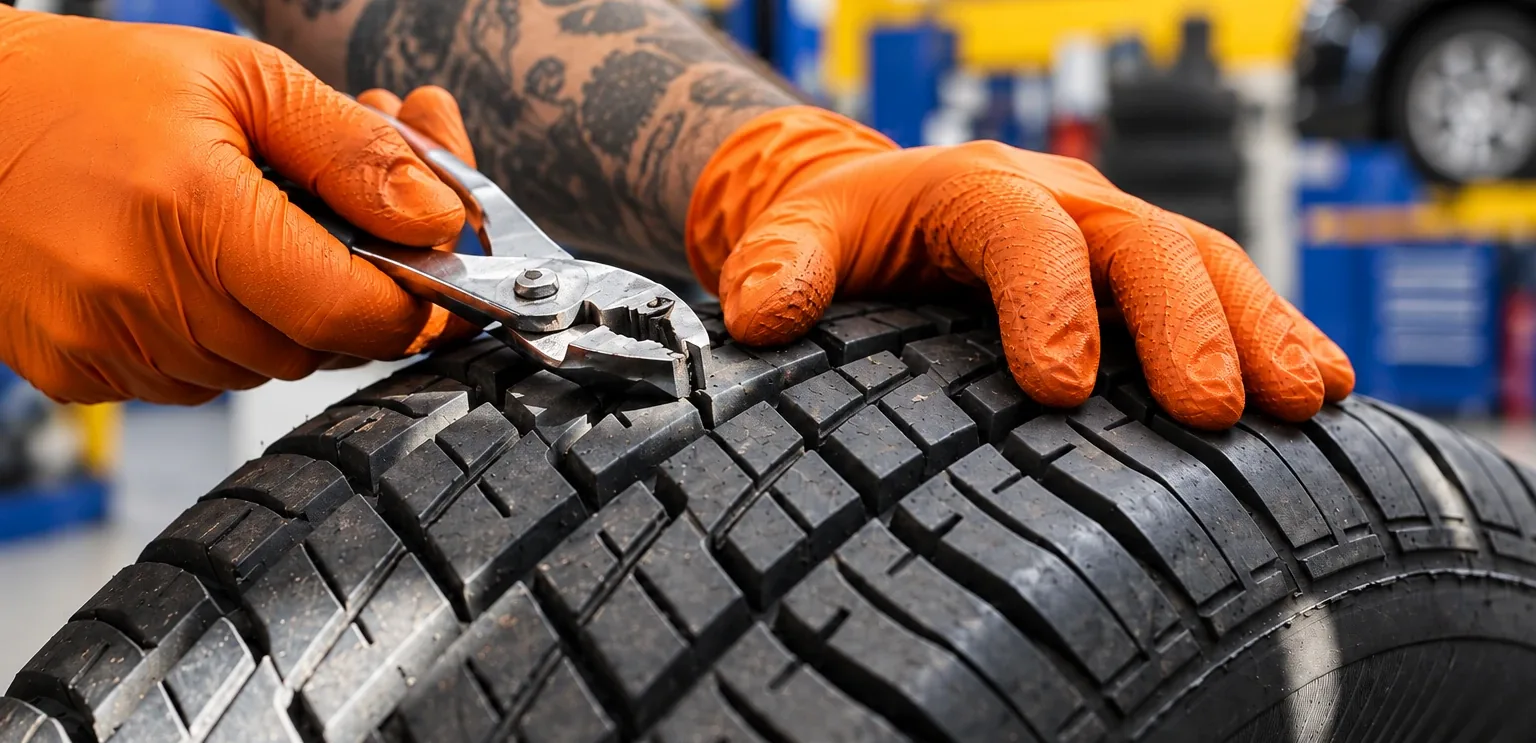
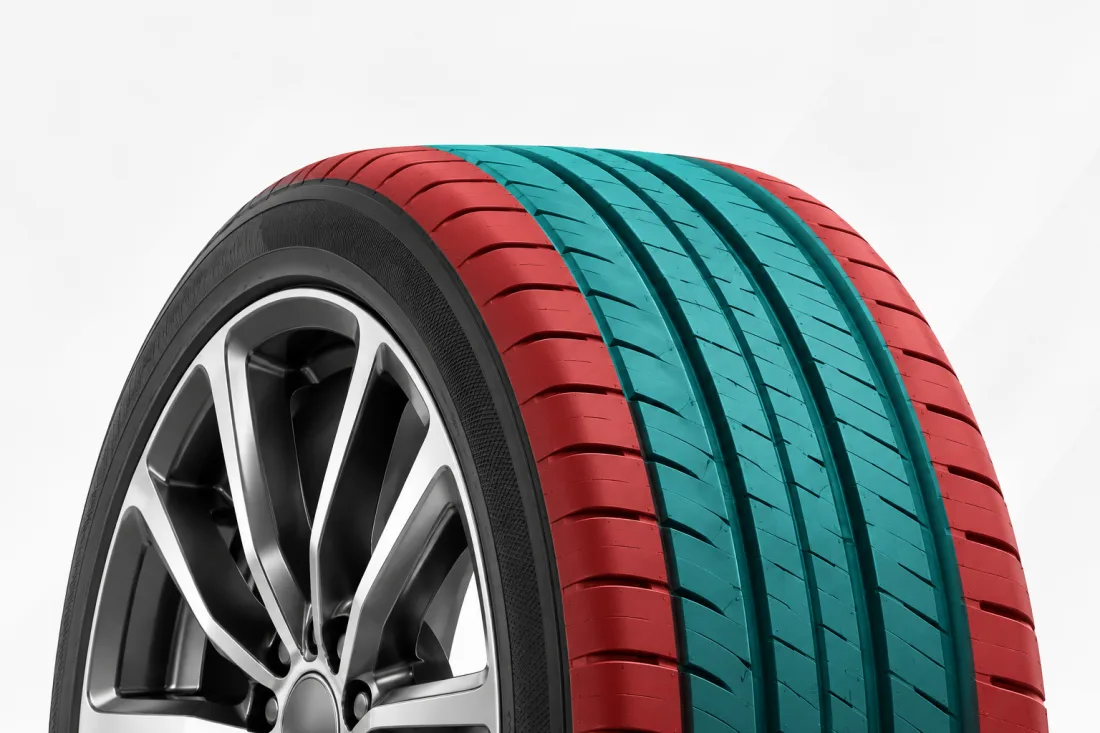
A puncture in the main tread can usually be repaired. The shoulder and sidewall flex too much for a repair to hold.
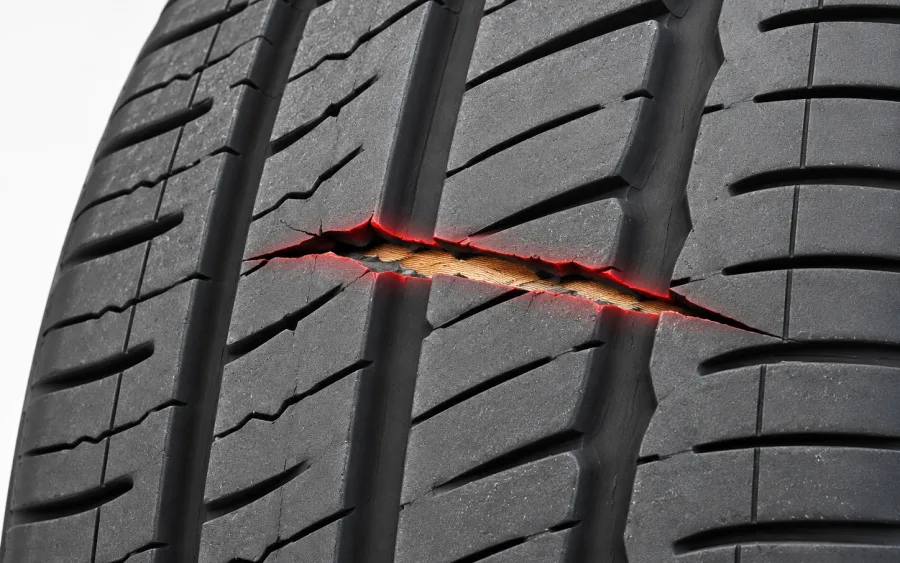
A cut deep enough to reach the cords weakens the whole tire, and no patch can seal it safely.
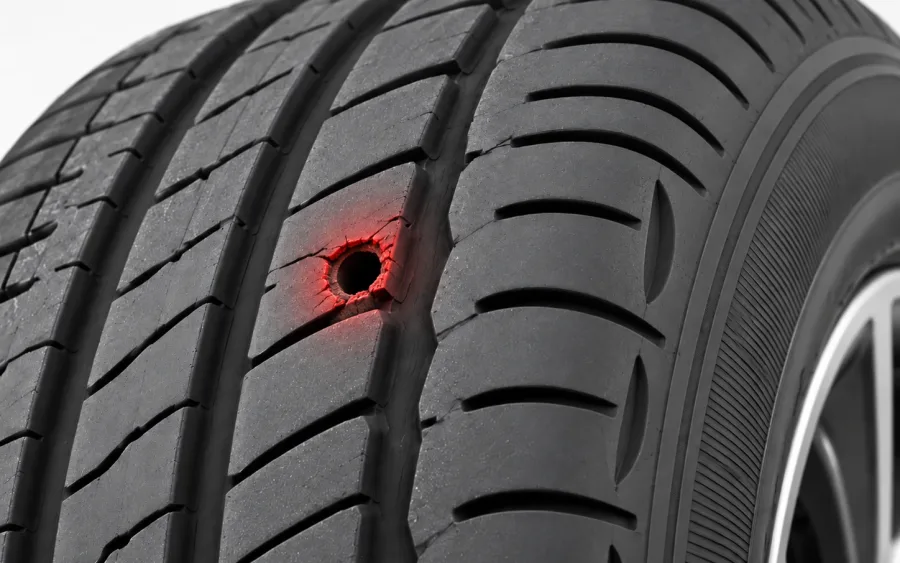
A hole wider than about 6 mm is too big for a plug-patch to seal, even in the tread centre.
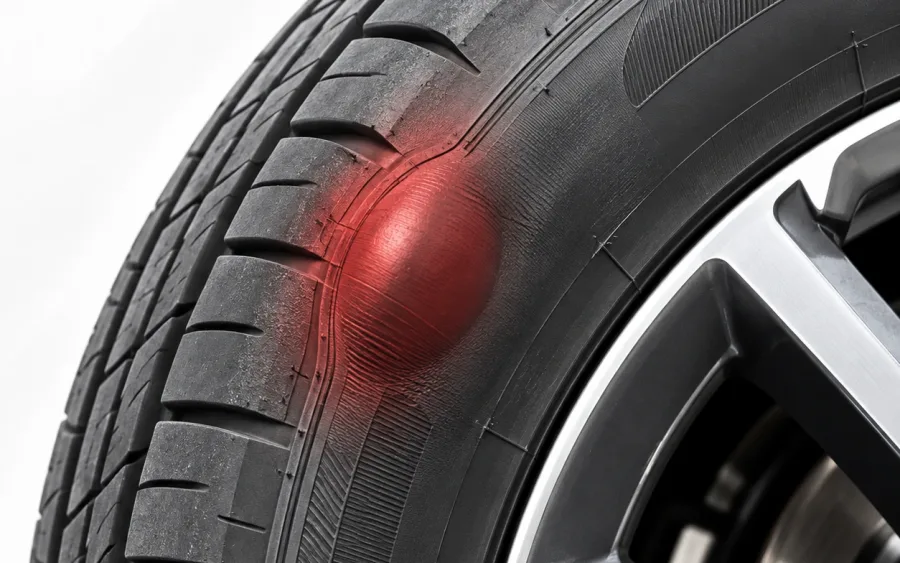
A bubble on the sidewall means the cords inside have broken, usually from a pothole. It can burst.
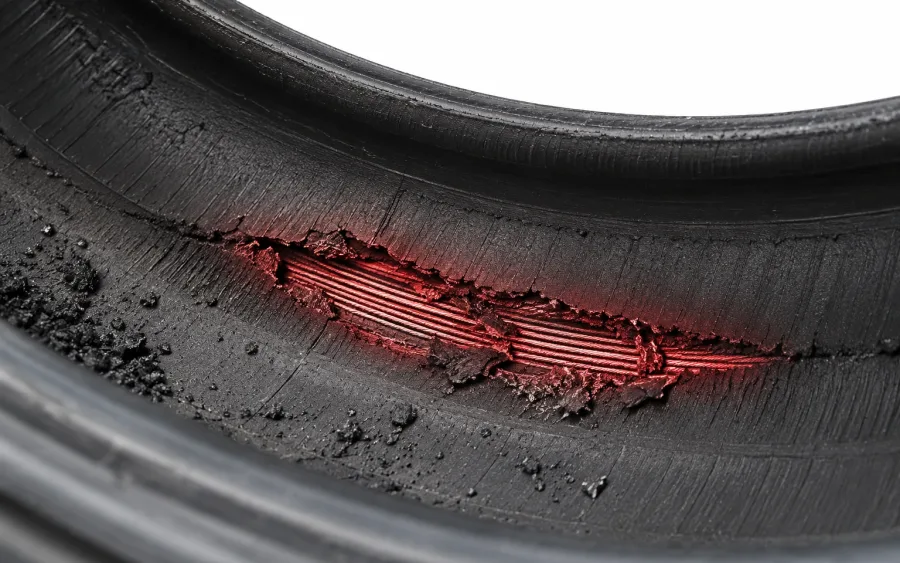
Driving low on air crushes the sidewall, so the inside gets shredded even when the outside looks fine.
If it can’t be repaired, we’ll show you why and quote a replacement, installed. We can usually replace it the same day, and you don’t pay the $19.99 inspection if you buy the new tire from us.
Pricing
Tire off the wheel, hole filled and inside sealed in one piece.
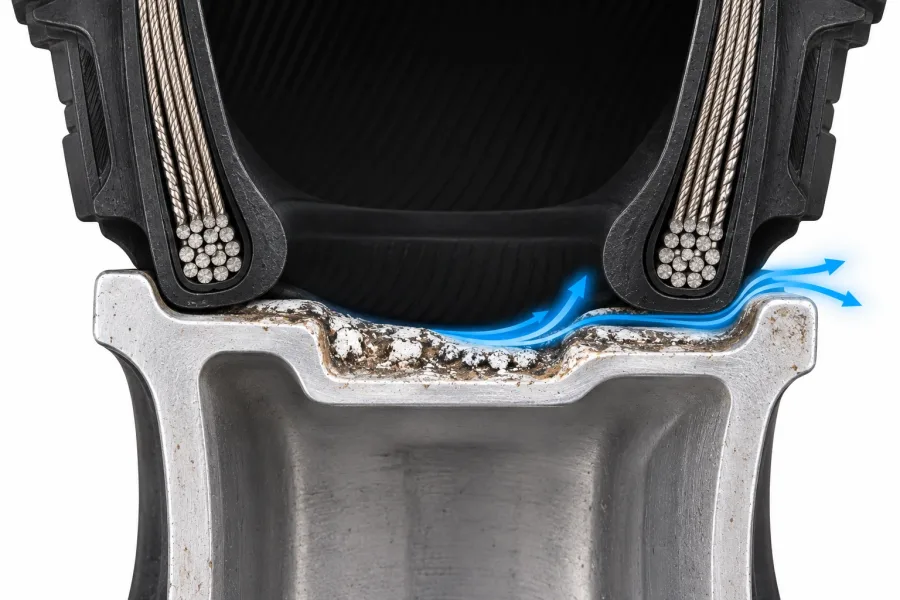
Salt corrosion ground off the rim edge, bead resealed.
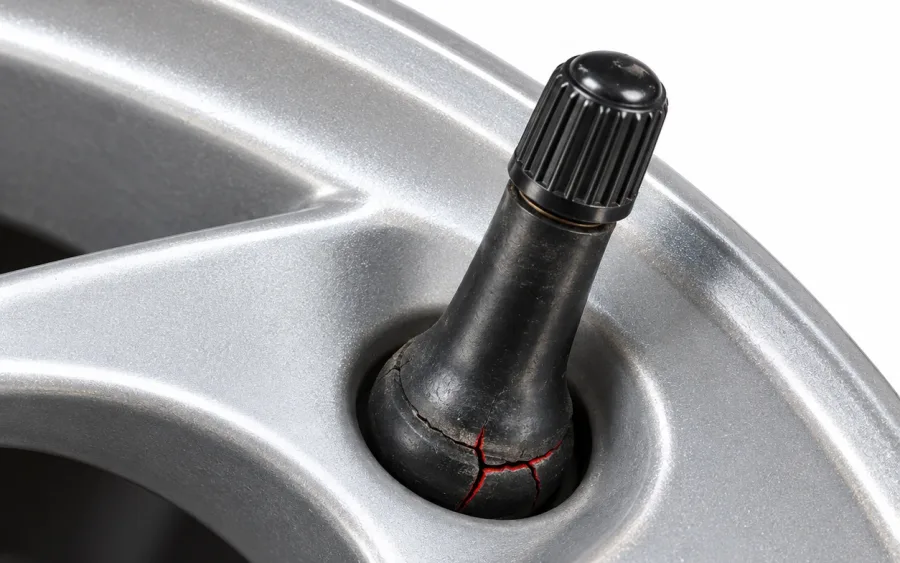
New stem, and your TPMS sensor checked if you have one.
When two punctures are both repairable
Free with a repair, or a new tire from us if it can’t be repaired
Prices are per tire, before HST. Low-profile tires are repaired the same way; run-flats only where the tire maker’s repair rules allow.
If it can’t be repaired
Most sizes are in stock and installed the same visit. Buy the new tire from us and the inspection is free.
We’ll put it on and check its pressure; the $19.99 inspection applies. A compact spare is for short trips only, at the speed limit printed on its sidewall (usually 80 km/h).
Most sizes are in stock and installed the same day, and the $19.99 inspection is waived. We match the brand and model where we can, so the pair wears evenly.
AWD needs tires with nearly the same tread depth, and one new tire can strain the drivetrain. We measure the others and tell you whether one is enough.
Usually, yes — if the puncture is small enough and located in the repairable tread area.
Leave the nail or screw in the tire if it is still holding air. Removing it can make the leak much worse.
If the tire is still holding proper pressure, you may be able to drive a short distance to have it inspected.
Check the pressure first and keep it properly inflated. If the tire is very low, losing air quickly, or completely flat, don’t continue driving on it. Driving underinflated can damage the inside of the tire and turn a repairable puncture into a tire that needs replacement.
A standard tire repair is $39.99.
If the issue turns out to be a valve, wheel, bead leak, corrosion or another problem rather than a simple puncture, additional charges may apply.
Most small punctures in the main tread area can be repaired. Damage in the sidewall or shoulder, large punctures, exposed cords, bulges, or tires that have been damaged by driving while flat usually need to be replaced.
We remove the tire and inspect it from the inside before deciding whether it can be safely repaired.
No. A puncture, cut, or other structural damage in the sidewall is not considered safely repairable.
The sidewall flexes constantly as you drive, so repairs are limited to the proper tread area.
Sometimes. The puncture itself may be repairable, but the bigger question is whether the tire was driven while flat.
When a tire is driven with little or no air, the sidewall can be damaged internally. That damage may not be visible until the tire is removed from the wheel.
A plug by itself fills the hole from the outside but does not seal and inspect the tire from the inside.
A combination plug-patch is installed from inside the tire. The stem fills the puncture and the patch seals the inner liner.
That’s the type of repair we use when the tire qualifies for repair.
A rope-style plug inserted from the outside can be useful as a temporary repair, but it is not the same as a proper internal repair.
A professional repair requires removing the tire, inspecting the inside, filling the puncture channel and sealing the inner liner.
Yes, in many cases.
A slow leak isn’t always caused by a nail. It can also come from the valve, valve core, bead area, corrosion between the tire and wheel, or occasionally the wheel itself.
We’ll locate the leak before recommending a repair.
The puncture needs to be within the repairable tread area and away from the shoulder and edge of the steel belts.
If the puncture is too close to the shoulder, the tire usually needs to be replaced. We can determine that once we inspect it.
As a general guideline, punctures up to about 6 mm or 1/4 inch in the repairable tread area may be repaired.
Larger punctures normally require tire replacement.
Most straightforward puncture repairs take about 30 to 45 minutes once the vehicle is being worked on.
More complicated leaks, corrosion, TPMS problems or multiple punctures can take longer.
Only if you don’t replace it with us. The inspection is $19.99, and it’s free when we repair the tire or you buy a new one from us.
The inspection lets us properly locate the leak and determine whether the tire can be safely repaired or needs to be replaced.
Then you only pay for the repair: $39.99. The inspection’s on us.
It’s also free if the tire can’t be repaired and you buy a new one from us. The $19.99 inspection only applies if you’d rather not go ahead with the repair or replacement, or you just want us to put your spare on.
A properly performed repair is intended to last for the remaining usable life of the tire, provided the tire is otherwise in good condition.
Possibly.
A temporary plug doesn’t tell us what condition the inside of the tire is in. Once the tire is removed, we can determine whether it can be properly repaired or whether it needs replacement.
Common causes include:
Very small leaks can be difficult to spot without testing the tire.
Often, yes.
If corrosion or debris is preventing the tire from sealing properly against the wheel, the tire can be removed and the bead area cleaned and resealed.
If the wheel itself is badly corroded, bent or damaged, additional work or replacement may be required.
It may be a different leak, a valve problem, a bead leak, wheel corrosion, or an issue with the previous repair.
Often it’s more than one thing at once. Common combinations we find:
We’ll test the complete tire and wheel assembly rather than assuming the original puncture is the problem.
No.
A sidewall bubble or bulge usually means the internal cords have been damaged, often from hitting a pothole or curb. The tire needs to be replaced.
It depends on the location and depth.
Small tread punctures can sometimes be repaired, but a cut that damages the cords, reaches the sidewall or shoulder, or creates a larger opening is not safely repairable.
A pothole doesn’t necessarily mean the tire needs replacement.
We look for sidewall bulges, cuts, broken cords, impact damage and wheel damage. If the tire has structural damage, it must be replaced.
Maybe — but it needs to come off the wheel first.
Driving with very low pressure can damage the inside of the sidewall even when the outside still looks normal. If we find internal abrasion, exposed cords or structural damage, the tire cannot be repaired.
A tire can sometimes have more than one repair if each puncture is independently repairable and the repairs do not overlap.
The location and spacing of previous repairs matter, so we inspect the tire before making that decision.
Sometimes.
Run-flat tires can have additional manufacturer-specific repair restrictions. Whether one can be repaired depends on the tire, the puncture and whether it has been driven while deflated.
We’ll inspect it and follow the applicable tire manufacturer’s repair requirements.
Often, yes.
Some Tesla and other EV tires have acoustic foam bonded to the inside of the tire to reduce road noise. A section of foam may need to be carefully removed to inspect and repair the puncture properly.
The tire still has to meet the normal requirements for a safe repair.
Yes, many Tesla tires can be repaired just like other passenger tires if the puncture is in the repairable area and the tire hasn’t suffered additional damage.
Some Tesla tires contain acoustic foam, which adds an extra step to the repair.
Normally, no.
The TPMS sensor is attached to the wheel rather than the tread area being repaired. Because the tire is removed during a proper repair, we can also inspect the sensor and valve area.
A sensor can sometimes be damaged by driving on a severely flat tire or during previous tire work.
Not necessarily.
The TPMS light tells you that one or more tires may be below the required pressure. That can be caused by a puncture, temperature changes, a bead or valve leak, or occasionally a TPMS sensor problem.
We’ll check the actual tire pressures and inspect for leaks.
Yes.
Winter tires follow the same basic puncture-repair rules as other passenger tires: the location, size of the puncture and condition of the tire determine whether it can be repaired.
Yes, provided the damage is within the repairable tread area and the tire has not suffered sidewall or run-flat damage.
Low-profile tires can be especially vulnerable to impact damage from potholes, so we’ll also inspect the sidewall and wheel.
Possibly.
Repair policies can vary by tire manufacturer and tire type. We’ll inspect the tire and determine whether a repair is permitted and appropriate for that tire.
Because the tire has to be removed from the wheel for a proper repair, it can be checked and balanced when it is reinstalled.
Calling ahead is recommended, especially during busy tire season. We can let you know the best time to come in and reduce your wait.
Yes. We sell and install replacement tires and can help find the appropriate size and type for your vehicle.
Depending on tread wear, drivetrain and vehicle requirements, we may recommend replacing one tire, two tires or a complete set.
Not always. It depends on your drivetrain and how much tread is left on your other tires.
On a front- or rear-wheel-drive car, one new tire is often fine if the others still have plenty of tread. If they’re worn, we recommend a pair on the same axle so they grip and wear evenly.
On all-wheel drive, all four tires need nearly the same tread depth. We measure them and tell you whether one, two or four is the right call.
An AWD system expects all four tires to turn at almost the same speed. A new tire is taller than worn ones, so it turns at a different speed, and the system works constantly to make up the difference. Over time that can strain or damage the transfer case and differentials.
Most vehicle makers allow only a small difference in tread depth, usually 2/32″ to 4/32″. Your owner’s manual has the exact figure for your vehicle.
On the rear axle in most cases, even on front-wheel-drive cars.
Newer tires on the back make the car less likely to slide out on wet or icy roads.
We match the brand, model and size where we can, so all your tires grip and wear the same.
If your exact tire isn’t available, we’ll suggest the closest match and explain any difference before we install it.
Closed now
Brampton ON L6T 5R4